Time to Say Goodbye to PHP 7.4 — My Blogs Are Finally Getting an Upgrade
After Years on PHP 7.4, It’s Finally Time to Upgrade to 8.x
PHP 7.4 No Longer Supported — Blog Upgrades on the Agenda
The “If It Works, Don’t Touch It” Days Are Over — Time to Upgrade PHP
WordPress Warning: PHP 7.4 Is Outdated, Time for Me to Act
Your site is running on an outdated version of PHP (7.4.33), which does not receive security updates. It should be updated.
What is PHP and how does it affect my site?
PHP is one of the programming languages used to build WordPress. Newer versions of PHP receive regular security updates and may increase your site’s performance. The minimum recommended version of PHP is 8.3.
PHP8.2 is the minimum recommended version for WordPress.


WordPress Shows PHP7.4 is Deprecated and Suggests a Upgrade to PHP8.x
WordPress has begun displaying warnings to site administrators indicating that PHP 7.x is no longer supported. These notices serve as a critical reminder that continued use of outdated PHP versions poses significant risks, including security vulnerabilities, reduced performance, and incompatibility with the latest WordPress features and plugins. The PHP development team officially ended active support for PHP 7.4 in November 2022, meaning no further security patches or bug fixes will be released. As a result, running WordPress on PHP 7.x is now considered insecure and deprecated.
To maintain your site’s security, stability, and performance, it is strongly recommended to upgrade to PHP 8.x as soon as possible. PHP 8 brings a range of improvements, including enhanced speed, better error handling, and new language features that are increasingly being adopted by plugin and theme developers. Before upgrading, you should ensure that all your themes and plugins are compatible with PHP 8.x, and ideally test the upgrade in a staging environment to avoid breaking your live site. Taking this step not only protects your website but also prepares it for future WordPress updates that may eventually require PHP 8.x or higher.
Several of my blogs (eight in total) have been running on PHP 7.4 for many years. Generally speaking, if it works, don’t touch it — so I’ve been putting off any updates out of convenience. But it looks like I’ll hve to set aside some time soon to test PHP 8 first, and then gradually upgrade.

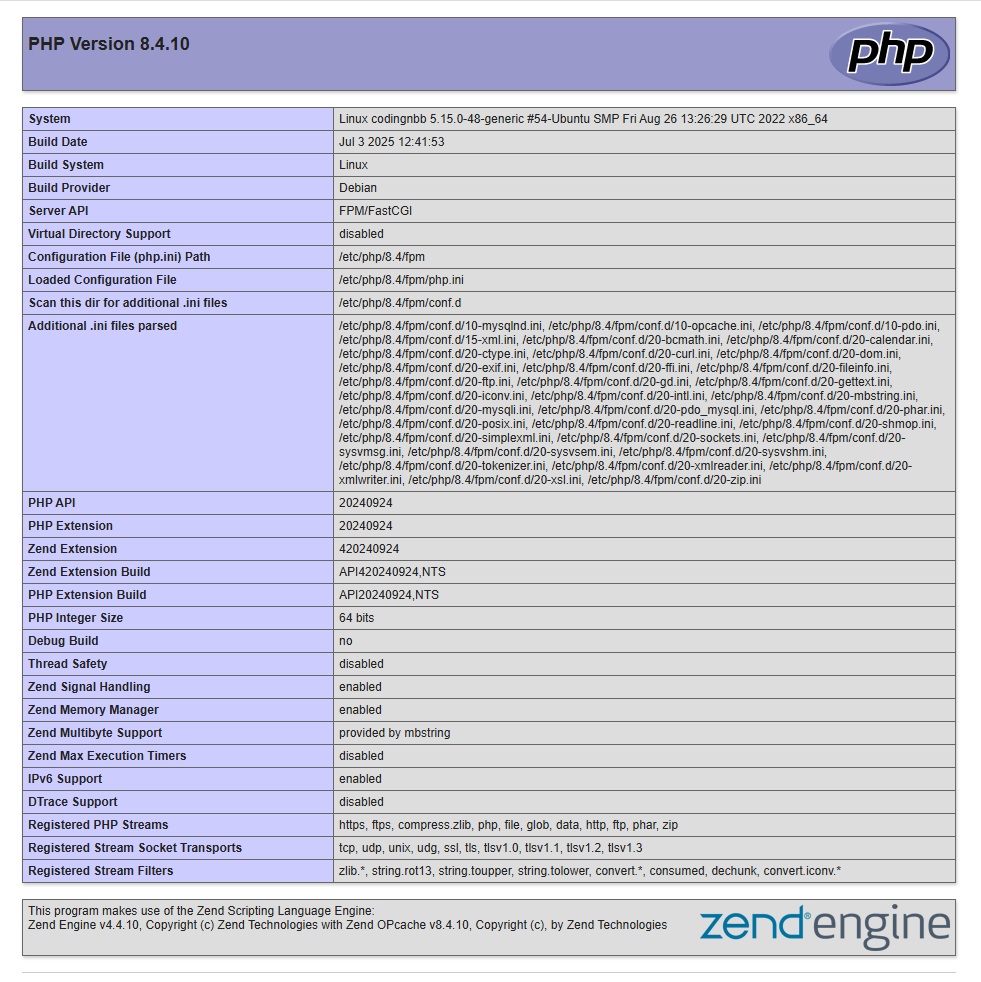
After upgrade to PHP8.4 – the phpinfo() shows version is indeed 8.x
PHP Hypertext Preprocessor
–EOF (The Ultimate Computing & Technology Blog) —
Last Post: How to Clean Up NVM Node Versions Except One?
Next Post: C++ Forward References: The Key to Perfect Forwarding